Nvidia Controls 90% of Desktop GPU Market as Shipments Hit a Four-Year High

Nvidia Controls 90% of Desktop GPU Market as Shipments Hit a Four-Year High

Nvidia’s grip on the desktop graphics card market is showing little sign of weakening. New data from Jon Peddie Research shows the company controlled roughly 90% of the add-in board GPU market in Q2 2026, while global shipments climbed to their highest level in around four years.

Desktop graphics card shipments reached approximately 12.5 million units during the quarter, representing a strong increase from the previous three months. That is particularly surprising because GPU prices remain high and many PC gamers have complained about the rising cost of building or upgrading a gaming system.
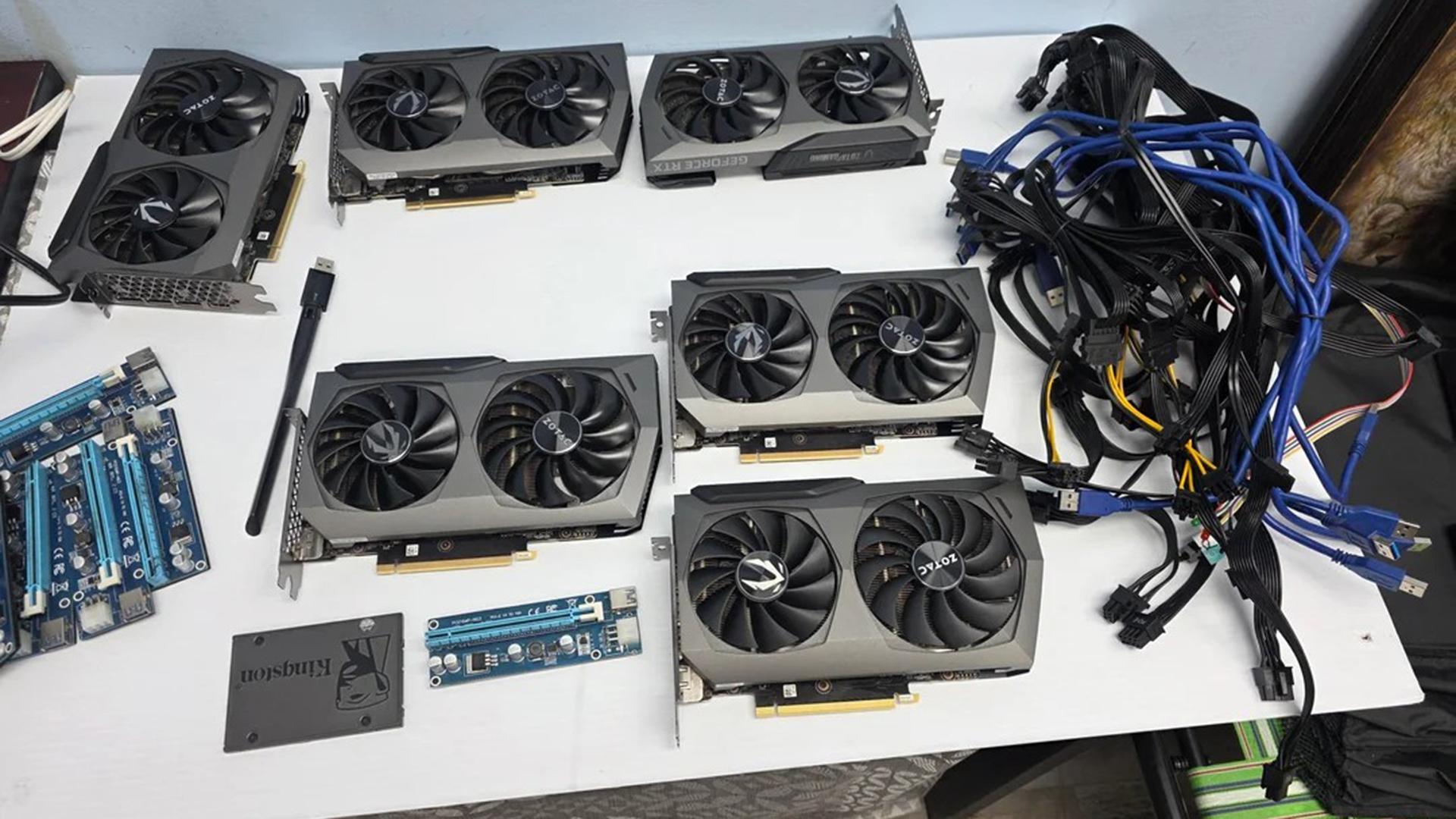
Desktop graphics card shipments hit four-year high of 12.5 million despite  increasing prices — Nvidia takes 90% share as gamers rush to beat looming  price spikes | Tom's Hardware

Nvidia alone is estimated to have shipped around 11.25 million desktop GPUs during the quarter. AMD held roughly 8% of the market, while Intel accounted for about 2%, leaving Nvidia with an enormous advantage despite both competitors continuing to release new gaming hardware.

The bigger surprise may be overall demand. Instead of slowing down as graphics cards become more expensive, buyers appear to be purchasing more GPUs. The desktop GPU attach rate also climbed sharply, suggesting that discrete graphics cards remain an important part of the PC upgrade cycle.

Part of that demand could come from gamers buying hardware earlier than planned because they expect prices to rise further. Memory costs, component shortages, supply-chain uncertainty, and strong demand for advanced chips from the AI industry have all contributed to concerns about future GPU pricing.

Desktop graphics card shipments hit four-year high of 12.5 million despite  increasing prices — Nvidia takes 90% share as gamers rush to beat looming  price spikes | Tom's Hardware

For Nvidia, the numbers show that its success in AI has not weakened its gaming position. The company may now generate most of its revenue from data centers, but GeForce remains overwhelmingly dominant in the desktop graphics market, especially across higher-end gaming systems.

AMD and Intel still have opportunities to gain share, particularly if they can compete aggressively on pricing. But with Nvidia sitting near 90% while overall shipments continue climbing, breaking its dominance will require more than simply launching another generation of GPUs.

For PC gamers, the most interesting part of the report is simple: high prices have not killed demand. Desktop graphics card shipments are at their strongest level in years, and Nvidia is taking the overwhelming majority of that market.

NVIDIA DLSS 5 Launches September 3 — But Its New AI Rendering Comes With a Performance Cost

NVIDIA DLSS 5 Launches September 3 — But Its New AI Rendering Comes With a Performance Cost

NVIDIA is preparing to launch DLSS 5 on September 3, 2026, pushing AI even deeper into the way PC games are rendered. The new generation introduces 3D-Guided Neural Rendering, expanding DLSS beyond traditional upscaling and Frame Generation. NBA 2K27 will be among the early games supporting the technology, giving RTX 50 Series owners one of the first opportunities to see how it performs outside NVIDIA’s demonstrations.

Nvidia DLSS 5 turns every game into AI slop - Notebookcheck News

The biggest talking point, however, is performance. NVIDIA’s early demonstrations suggest some DLSS 5 neural rendering workloads can reduce base rendering performance by roughly 50–60% before technologies such as Super Resolution and Frame Generation are included. That doesn’t mean every DLSS 5 game will suddenly run 60% slower. Performance will depend heavily on the game, settings, resolution, and how developers implement the technology.

This trade-off shows where NVIDIA believes PC graphics are heading. Instead of relying entirely on GPUs to traditionally render every part of a frame, AI can increasingly help reconstruct or generate visual information. DLSS can then use upscaling and generated frames to recover performance and produce a much higher final frame rate. The result could look impressive, but it also makes the FPS number shown on screen less straightforward than it used to be.

You may also like :

The Witcher 3 Remastered PC Specs Are Pretty Reasonable

How to Fish: How Two Swedish Devs Turned a Failed Game Into a Steam Hit

DLSS 5 will require an RTX 60 for full neural rendering.

That’s why independent testing will matter once DLSS 5 reaches actual PC games. Gamers will need comparisons covering native rendering, DLSS image quality, base FPS, generated FPS, latency, and visual artifacts before deciding whether the extra graphical quality is worth the performance cost.

DLSS 5 isn’t simply another version of NVIDIA’s upscaler. It’s another step toward a future where AI becomes part of the rendering pipeline itself. September 3 will give PC gamers their first real opportunity to find out whether that future actually looks better — and how much GPU performance they’re giving up to get there.